
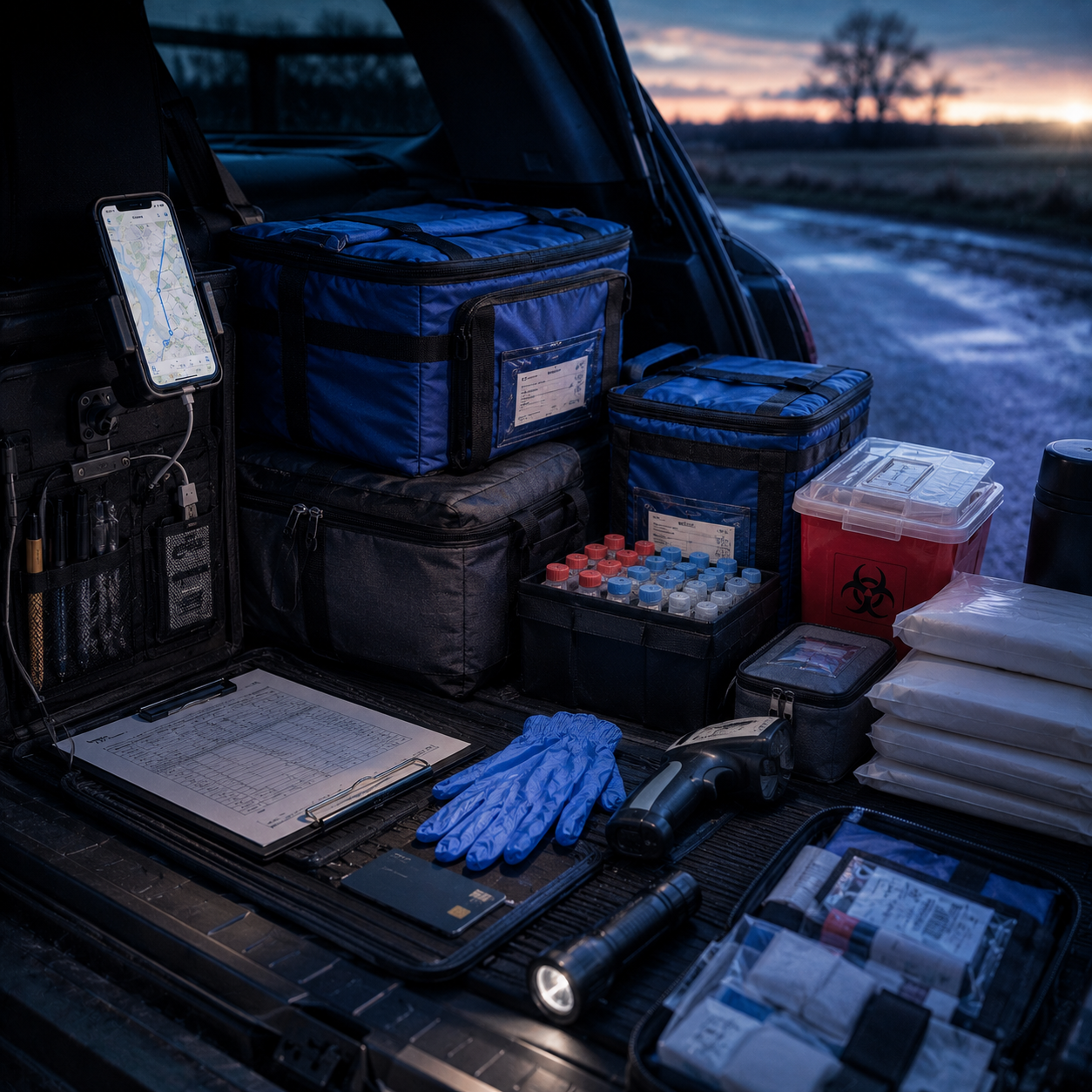
One of the most practical questions new medical couriers ask — and one that most resources answer vaguely — is exactly what equipment you need before your first run. Not a general list of suggestions. A specific, prioritized list of what to buy, what it costs, and what order to get it in so you are not overspending before you have income coming in or showing up to your first pickup unprepared.
The medical courier equipment list is shorter and less expensive than most people expect. You do not need a refrigerated vehicle, a specialized courier van, or thousands of dollars in supplies to start professionally. What you need is a specific set of items that signal to healthcare clients that you handle their specimens and medications at the professional standard their patients depend on.
This covers every item — required from day one, useful in month two, and worth investing in as your operation grows — with honest cost estimates and specific recommendations.
Why the Right Equipment Matters More Than Most New Couriers Realize
Healthcare facilities do not just evaluate your compliance documentation when deciding whether to work with you. They evaluate your professionalism at every touchpoint — including what you show up with on your first pickup.
A courier who arrives with a proper medical-grade insulated cooler, organized specimen transport bags, and a clipboard with chain of custody documentation already prepared looks like a professional operation. A courier who shows up with a grocery store cooler and no documentation system looks like someone who figured this out this morning.
The equipment investment is small. The professional impression it creates is significant — and in a business where client relationships drive income, first impressions at the facility level matter more than most new couriers account for.
For the full picture of what your first run should look and feel like from the client's perspective — how to run your first medical courier route like a professional covers the complete professional standard from arrival to delivery confirmation.
Tier 1 — Required Before Your First Run
These are the items you need in your vehicle before you accept a single pickup. Do not start your first run without every item on this list.
Medical Grade Insulated Cooler
What it is: A hard-sided insulated cooler designed to maintain temperature for medical specimens during transport.
Why it matters: Lab specimens — blood samples, urine cultures, tissue biopsies — require temperature-controlled transport. A standard grocery store cooler does not maintain consistent internal temperature the way a medical-grade cooler does, and healthcare clients can tell the difference when they see what you show up with.
What to look for:
- Hard-sided construction — not a soft bag
- Minimum 1-inch insulation thickness
- Secure latch closure
- Large enough to hold the expected pickup volume for your route
- Easy to clean interior — medical transport coolers need regular sanitizing
Recommended brands: Coleman Xtreme, YETI Tundra (premium), Igloo IMX Series Cost: $45 – $120 depending on size and brand What to buy first: A mid-range hard-sided cooler in the $50 – $70 range is sufficient for most specimen transport routes. Premium coolers can wait until your income justifies the upgrade.
Reusable Ice Packs — Medical Grade
What it is: Gel ice packs that maintain cold temperatures longer than standard ice and do not create condensation or water mess inside the cooler.
Why it matters: Standard ice melts and creates water that can compromise specimen packaging. Gel ice packs maintain temperature without the mess and can be refrozen between runs.
What to buy: A set of six to eight medium-sized gel ice packs gives you adequate cooling capacity for most specimen transport runs.
Cost: $15 – $35 for a starter set of six to eight packs Where to buy: Amazon, Walmart, medical supply distributors
Biohazard Specimen Transport Bags
What it is: Clear zip-lock bags with biohazard labeling and an absorbent pad in the bottom — the standard container for transporting individual lab specimens.
Why it matters: Healthcare facilities package individual specimens in these bags before handing them to you. You need your own supply for situations where a facility needs additional bags or where specimens need to be repackaged for secondary containment.
What to buy: A box of 100 biohazard specimen transport bags covers most couriers for several months of regular runs.
Cost: $20 – $40 for 100 bags Specification to look for: 95kPa rated bags meet IATA and DOT transport standards for biological specimens
Secondary Containment Bags or Transport Bags
What it is: Larger insulated bags or rigid containers used to group multiple specimen bags for transport inside your cooler — providing a secondary layer of containment if a primary bag leaks.
Why it matters: Healthcare compliance standards require secondary containment for biological specimen transport. A specimen bag inside a secondary containment bag inside a hard-sided cooler is the standard three-layer system that professional medical couriers use.
Cost: $15 – $40 for a starter supply of secondary containment bags
Chain of Custody Forms and Run Log
What it is: A documentation form that records every pickup and delivery — time, location, item description, and delivery confirmation — for every run you complete.
Why it matters: Chain of custody documentation is your professional protection and your client's compliance record. Every professional medical courier maintains a run log for every route. Couriers who do not are taking on liability they have no documentation to defend against.
What to use: Many clients provide their own run log forms or digital confirmation systems. Always have your own blank run log available as a backup. A simple one-page form that captures pickup time, location, item description, delivery time, location, and recipient confirmation covers every basic documentation requirement.
Cost: $5 – $15 to print a professional run log template — or included in the Medical Courier Launch Kit as a ready-to-use template.
Clipboard and Pen
What it is: A hard-backed clipboard with several pens.
Why it matters: Completing chain of custody documentation at a pickup or drop-off point requires a stable writing surface. Trying to sign forms against a wall or a car door looks unprofessional. A clipboard costs $5 and immediately signals that you are organized.
Cost: $5 – $12
Disposable Gloves
What it is: Nitrile examination gloves for handling specimen packages at pickup points.
Why it matters: Wearing gloves when handling biohazard-labeled packages demonstrates HIPAA and OSHA bloodborne pathogen awareness that healthcare clients notice and appreciate. It also protects you in the unlikely event a package seal is compromised.
Cost: $10 – $20 for a box of 100 nitrile gloves
Vehicle Cleaning Supplies
What it is: Disinfectant wipes, a spray disinfectant, and disposable cleaning cloths for sanitizing your cooler and transport bags between runs.
Why it matters: Your transport equipment comes into contact with biohazard-labeled packages on every run. Healthcare clients who see a well-maintained, clean transport setup trust you more than clients who see a cooler that has never been cleaned. Sanitizing your equipment after every run is a professional standard — not an optional extra.
Cost: $15 – $25 for a starter supply of cleaning materials
Tier 1 Total Cost — Required Before First Run
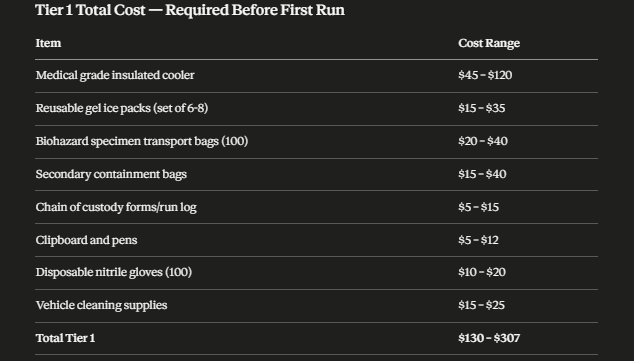
Most couriers complete their full Tier 1 equipment setup for $150 to $220. Combined with the compliance costs covered in the article on what it actually costs to start a medical courier business — your total launch investment stays well under $500 for the majority of new couriers.
Tier 2 — Useful in Month Two
These items are not required for your first run but become worth purchasing once your first contract income is coming in.
Temperature Monitoring Device
What it is: A digital temperature data logger that records internal cooler temperature throughout a transport run — providing documented proof that specimens were maintained within required temperature ranges during delivery.
Why it matters: Some healthcare clients — particularly hospital labs and blood banks — require temperature monitoring documentation for certain specimen types. Having this capability opens higher-value contract categories that couriers without it cannot pursue.
Cost: $45 – $120 for a basic validated data logger When to buy: When a client specifically requests temperature monitoring documentation or when you are pursuing blood bank or specialty lab contracts.
Vehicle Organizer or Cargo Management System
What it is: A trunk organizer or cargo management system that keeps your cooler, bags, and supplies organized and accessible during runs with multiple stops.
Why it matters: Efficiency during multi-stop routes directly affects your effective hourly rate. A disorganized vehicle where you spend 90 seconds searching for the right bag at each stop costs you 15 minutes on a ten-stop route. An organized vehicle where everything is exactly where you expect it saves that time every run.
Cost: $25 – $75 When to buy: When your route volume justifies the organizational benefit — typically month two or three.
Branded Magnetic Vehicle Signs
What it is: Removable magnetic signs displaying your business name that attach to your vehicle doors during runs.
Why it matters: Arriving at a healthcare facility in a vehicle displaying your business name looks more professional than arriving in an unmarked personal car. It also serves as passive marketing when you are parked at a facility and other staff see your vehicle.
Cost: $30 – $75 for a pair of door signs When to buy: Once your first contract is running and you want to build your professional presence.
Tier 3 — Worth Investing in as Your Operation Grows
These items become relevant when your operation expands beyond a single courier vehicle or when you pursue specialty contract categories.
Dry Ice Transport Container
What it is: A specialized insulated container designed for transporting specimens or biological materials that require dry ice maintenance — typically used for frozen specimen transport and certain pharmaceutical products.
Cost: $80 – $200 When to buy: When you pursue frozen specimen transport contracts or pharmaceutical contracts requiring dry ice-level temperature maintenance.
Validated Specimen Transport Box
What it is: A rigid, validated transport container that meets specific regulatory standards for transporting biological specimens by air or across state lines.
Cost: $100 – $300 depending on validation level When to buy: When your contracts involve air transport of biological materials or interstate shipment of regulated specimens.
Route Optimization Software Subscription
What it is: A dedicated route planning tool like Circuit Route Planner or OptimoRoute that optimizes multi-stop route sequencing for maximum efficiency.
Cost: $20 – $40/month When to buy: When your route volume reaches five or more stops per run and manual planning is costing you measurable time. For the full breakdown of how route optimization and AI tools help medical couriers earn more per hour — that article covers every tool with realistic time and income impact estimates.
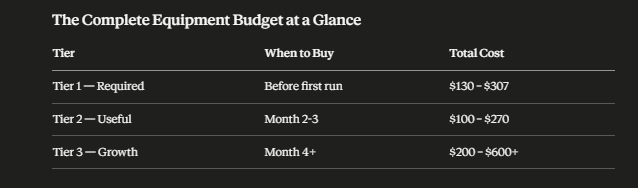
The Complete Equipment Budget at a Glance
The Resource That Includes Your Equipment Checklist
The Medical Courier Launch Kit includes a printable equipment checklist organized by tier, specific product recommendations with purchase links, a chain of custody documentation template, and the complete compliance and launch sequence that gets you from zero to first contract professionally and efficiently.
For the complete certification and compliance requirements that accompany your equipment setup — what certifications and requirements medical couriers need before starting covers every credential item alongside the equipment in your professional launch package.
And for the story of how this all comes together in a real first month — how one person lost their job and built a medical courier business from scratch covers the complete timeline from first purchase to first contract income.
You Might Also Like
- Medical Courier Startup Costs — What You Actually Need to Get Started
- How to Run Your First Medical Courier Route Like a Professional
- How to Write a Medical Courier Contract That Protects You
- The Mistakes Most New Medical Couriers Make in Their First 90 Days
Ready to take the next step? Read how to market your medical courier business without spending money — the zero-cost outreach strategies that fill your client pipeline before your Tier 1 equipment has even paid for itself.
Frequently Asked Questions
What equipment does a medical courier need before their first run?
The essential equipment for a medical courier's first run includes a medical-grade hard-sided insulated cooler with gel ice packs, biohazard specimen transport bags, secondary containment bags, chain of custody documentation forms, a clipboard and pens, disposable nitrile gloves, and vehicle cleaning supplies. Total cost for this starter kit ranges from $130 to $307 for most couriers.
Do medical couriers need a refrigerated vehicle?
No — most medical courier runs do not require a refrigerated vehicle. Standard specimen transport uses a medical-grade insulated cooler with gel ice packs to maintain temperature during transport. A refrigerated vehicle becomes relevant for couriers pursuing specialty contracts involving frozen biological specimens or temperature-sensitive pharmaceuticals — but is not required to start.
What kind of cooler does a medical courier use?
Medical couriers use hard-sided insulated coolers — not soft bags or standard grocery store coolers. The hard-sided construction maintains more consistent internal temperature, is easier to clean and sanitize between runs, and looks more professional at clinical pickup and drop-off environments. Brands like Coleman Xtreme, Igloo IMX Series, and YETI Tundra are commonly used by medical couriers at different price points.
What are biohazard specimen transport bags and where do medical couriers get them?
Biohazard specimen transport bags are clear zip-lock bags with biohazard labeling and an absorbent pad in the bottom — the standard container for individual lab specimens. They are rated to 95kPa to meet biological specimen transport standards. Medical couriers purchase them from Amazon, medical supply distributors, or laboratory supply companies. A box of 100 bags costs $20 to $40 and covers most couriers for several months of regular routes.
How much does a medical courier's starter equipment kit cost?
A complete Tier 1 starter equipment kit — everything required before the first run — costs $130 to $307 for most couriers. Most couriers spend $150 to $220 on their initial equipment purchase. Combined with compliance costs for LLC registration, commercial insurance, HIPAA training, and a background check, total first-month investment for most new medical couriers stays under $500.
Do medical couriers need to clean their equipment between runs?
Yes — sanitizing transport equipment between runs is a professional standard and a compliance expectation for healthcare courier work. Disinfectant wipes or spray disinfectant applied to the interior of your cooler and any reusable transport containers after each run prevents cross-contamination between client pickups and demonstrates the hygiene standard that healthcare facilities expect from professional courier contractors.
What documentation do medical couriers carry on every run?
Professional medical couriers carry chain of custody documentation forms on every run — recording pickup time, pickup location, item description, delivery time, delivery location, and delivery confirmation for every specimen or package transported. Many clients provide their own run log forms or digital confirmation systems. Couriers should always have their own blank run log available as a backup regardless of what the client provides.
Comments ()