
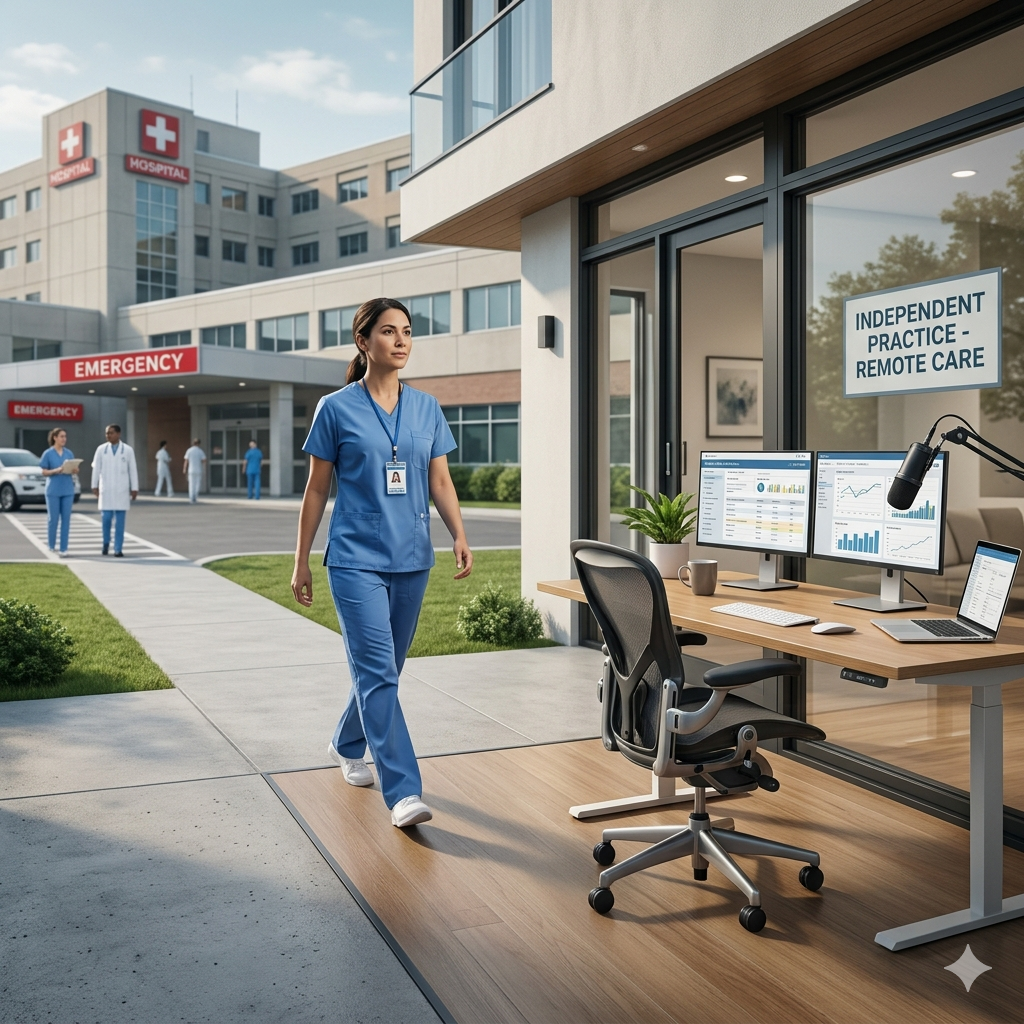
There's a specific kind of financial frustration that nurses know well. You're doing one of the most demanding jobs in healthcare. You're skilled, licensed, trusted with life-and-death decisions on a daily basis — and somehow the paycheck at the end of the month still doesn't feel like it reflects any of that.
The answer most hospitals offer is more shifts. More bedside hours. More of the same physical and emotional output that's already running you thin. That's not a solution. That's just more of the problem.
What actually changes the equation is income that doesn't require you to trade more clinical hours for more money. Income built on what you already know — your clinical background, your professional judgment, your medical literacy — applied somewhere other than a hospital unit.
This is what that looks like in 2026.
What This Covers
- The most realistic ways nurses are making extra money outside of the hospital right now
- What each option actually pays — not aspirational numbers, real ones
- Which options work best depending on your energy level and available time
- How your nursing background gives you a built-in advantage in each category
- How to identify which option fits your specific situation
Why 2026 Is a Good Time to Be a Nurse With Side Income Goals
The market for nurse expertise outside of traditional clinical roles has expanded significantly over the last several years — and it keeps expanding. Telehealth normalized remote clinical work. The content marketing boom created consistent demand for medically accurate writing. The legal industry's need for clinical review never went anywhere. Health and wellness coaching became a mainstream industry worth billions.
None of these trends are reversing. If anything, the demand for nurses who can operate outside of traditional clinical structures is higher now than it's ever been — and the infrastructure to support remote, flexible, non-bedside work is more accessible than it was even three years ago.
The nurses building meaningful side income right now aren't doing anything extraordinary. They identified one area where their background had value outside the hospital, packaged it clearly, and started. That's the whole strategy.
For a ranked breakdown of every major option with income ranges and flexibility ratings, the best side hustles for nurses ranked by income and flexibility covers the full picture in one place. This article goes deeper on the specific options and what getting started in each one actually looks like.
Option 1 — Medical and Healthcare Content Writing
What it pays: $50 – $120/hour | $0.15 – $0.50 per word for article work Time to first income: 2 – 4 weeks Energy demand: Low to moderate
Healthcare brands, patient education platforms, telehealth companies, insurance companies, pharmaceutical marketers, and health-focused media outlets all produce enormous amounts of written content — and the vast majority of them are struggling to find writers who actually understand what they're writing about.
A nurse who can write a clear, accurate article about managing type 2 diabetes, preparing for a cardiac catheterization, or understanding a new medication class is not competing with a general freelance writer. They're in a completely different category — and the market prices them accordingly.
You don't need a journalism degree or a writing portfolio to start. What you need is the ability to translate clinical knowledge into language that a patient or general audience can understand — and if you've ever explained a diagnosis, a procedure, or a medication to a patient or their family at the bedside, you've already demonstrated that skill more convincingly than any writing sample could.
What getting started looks like: Create a profile on a platform like Contently, ClearVoice, or Upwork specifically as a medical writer. Write two or three sample pieces on clinical topics you know well — post them on a free Medium account or a basic LinkedIn article if you don't have a personal website yet. Reach out directly to health brands and patient education companies with a short, specific pitch. Your nursing credentials in the subject line open doors that a general writer's pitch simply doesn't.
Option 2 — Legal Nurse Consulting
What it pays: $100 – $150+/hour Time to first income: 4 – 8 weeks Energy demand: Moderate (intellectual, not physical)
Legal nurse consulting is the highest-income-ceiling side hustle available to nurses with clinical experience — and it's consistently underentered because most nurses don't know it exists or assume they're not qualified.
Here's what it actually involves: attorneys handling medical malpractice, personal injury, workers' compensation, and healthcare fraud cases need someone who can read a medical record and tell them what it means. They need to know whether the standard of care was met, where the documentation gaps are, what the clinical timeline looks like, and whether the nursing care described in the record is consistent with accepted practice.
That analysis requires a clinical nurse. Not a paralegal. Not a medical expert who retired 20 years ago. An active or recently active clinical nurse who knows what actually happens at the bedside and can articulate it in writing.
Solo attorneys and small litigation firms are actively looking for this support — and paying $100 to $150 per hour or more for nurses who can do it reliably. A legal nurse consulting certificate adds credibility but isn't required to land a first case. Your clinical experience and your ability to write a clear, well-organized case analysis are what matter most to an attorney who needs to understand what happened to their client.
For a full breakdown of how nurses build this into a high-paying freelance niche — including how to position your specialty and what to charge — the article on how nurses turn clinical knowledge into freelance income covers the positioning and packaging strategy in depth.
Option 3 — Telehealth Nursing
What it pays: $30 – $55/hour Time to first income: 1 – 3 weeks Energy demand: Moderate (clinical but remote)
Telehealth is not a pandemic trend that faded. It's a permanent structural shift in how healthcare is delivered — and the demand for remote clinical nursing roles has grown steadily every year since 2020.
Remote triage nursing, chronic care management, utilization review, care coordination, disease management coaching, and post-discharge follow-up are all being delivered remotely at scale. Many of these roles are part-time, contract-based, and specifically designed to be filled by experienced nurses who want clinical work without the physical demands of bedside care.
For a nurse who loves the clinical side of nursing but is worn down by the physical environment — the 12-hour standing shifts, the patient lifting, the relentless pace of a busy unit — telehealth is one of the most direct transitions available. Same clinical knowledge, same patient interaction skills, entirely different working environment.
Platforms actively recruiting for remote nursing roles include Teladoc, MDLive, and Amazon Clinic — alongside dozens of smaller telehealth companies and health systems with remote care programs that post openings regularly.
What getting started looks like: Search "remote RN" or "telehealth nurse" on LinkedIn, Indeed, or FlexJobs. Your existing license and clinical experience are your primary qualifications. Most telehealth roles require two or more years of clinical experience — which most nurses reading this already have.
Option 4 — Health and Wellness Coaching
What it pays: $75 – $200/hour for individual sessions | $500 – $2,000/month for program packages Time to first income: 3 – 6 weeks Energy demand: Low to moderate
The health coaching market is enormous — and full of coaches with wellness certifications and no clinical background. A nurse who enters this space brings something that most health coaches genuinely can't: clinical credibility, medical literacy, and a professional foundation that clients trust in a way they simply don't trust a wellness influencer with a certificate.
Nurses who build health coaching practices typically focus on a specific area that aligns with their clinical background and personal interest — weight management, diabetes self-management, cardiovascular health, stress and burnout recovery (fitting, given the profession), postpartum wellness, or chronic pain management.
The business model that works best for most nurse health coaches is package-based — a 90-day program, a 6-week intensive, a monthly membership — rather than session-by-session. Packages create predictable income and give clients a clear outcome to commit to, which leads to better results and better testimonials that build the next client.
A health coaching certification adds credibility and is worth getting — but it doesn't have to happen before you start. Many nurses begin by offering coaching informally to people in their network, refining their approach, and adding the certification as their client base grows.
Option 5 — CPR and First Aid Instruction
What it pays: $25 – $75/hour | $300 – $800 per group class Time to first income: 1 – 2 weeks Energy demand: Low
This is the fastest side income path on the list for a nurse who needs income quickly and doesn't want to invest weeks building a new skill set or client base.
CPR and first aid certification is required by law for teachers, coaches, childcare workers, corporate employees in certain industries, and community volunteers — which means the demand for instruction is consistent, local, and doesn't require marketing to a cold audience. The clients come to you because they have a compliance requirement, not because you convinced them they needed it.
Becoming an authorized instructor through the American Heart Association is a straightforward process for any licensed nurse. Once certified, you set your own schedule, price your classes, and fill them through local outreach to schools, businesses, gyms, community organizations, and healthcare facilities.
This won't build a $3,000/month side income. But it's a realistic $500 to $1,200/month supplement that requires minimal ongoing effort and zero ongoing client acquisition once you have a few regular organizational clients who rebook quarterly.
Option 6 — Nursing Tutoring and NCLEX Coaching
What it pays: $40 – $100/hour Time to first income: 1 – 3 weeks Energy demand: Low to moderate
Nursing school enrollment is growing — and nursing students are consistently among the most motivated tutoring clients in existence, because the stakes are high, the material is dense, and the consequences of not passing boards are real.
A nurse who can explain pharmacology, pathophysiology, clinical reasoning, or NCLEX test-taking strategy in a way that actually clicks for a struggling student is providing something genuinely valuable. And the market pays for it.
Beyond one-on-one tutoring — which you can offer through platforms like Wyzant or directly through nursing school Facebook groups and forums — there's a significant passive income opportunity in creating NCLEX prep materials, study guides, mnemonics, and clinical reference resources that nursing students buy repeatedly. Platforms like Etsy, Gumroad, and Payhip support this kind of digital product business with minimal overhead.
Who this works best for: Nurses who enjoy teaching, have strong NCLEX recall, or have preceptor experience that translates naturally into a coaching or tutoring dynamic.
Option 7 — Freelance Chart Review and Clinical Documentation Support
What it pays: $40 – $80/hour Time to first income: 2 – 4 weeks Energy demand: Low
Insurance companies, utilization review organizations, healthcare systems, and legal firms all need nurses who can review medical records, assess documentation quality, and evaluate clinical appropriateness — remotely, on a contract basis, without direct patient care.
This work is almost entirely async — you receive records, review them on your schedule, and deliver a written analysis or report within an agreed timeline. There's no patient contact, no real-time availability requirement, and no physical demand.
Clinical documentation improvement (CDI) is a growing subspecialty within this category — nurses who help healthcare facilities ensure their documentation accurately reflects the complexity and severity of patient care. CDI work is in consistent demand from hospital systems and physician practices trying to ensure accurate reimbursement and quality reporting.
What getting started looks like: Search for remote utilization review nurse, clinical documentation specialist, or remote case review nurse positions on LinkedIn and Indeed. Many of these roles are contract-based and part-time — specifically designed for experienced nurses who want to work independently without a full-time commitment.
Option 8 — Creating and Selling Nursing Digital Products
What it pays: $200 – $3,000+/month (passive, grows with catalog) Time to first income: 4 – 8 weeks for first sales Energy demand: High upfront, then passive
Study guides, care plan templates, NCLEX mnemonics, clinical reference sheets, nurse planner templates, shift report forms, medication reference cards — nursing students and new graduates buy these resources consistently, and nurses who create them earn passive income on every sale without ongoing time investment after the initial build.
This is the highest-flexibility option available because once a product exists, it sells without your time. The income is passive in the truest sense — you can be on a 12-hour shift while someone purchases and downloads a study guide you made six months ago.
The tradeoff is realistic: building a digital product catalog that generates meaningful passive income takes time, consistency, and more upfront effort than most people expect. The nurses who succeed with this model treat the first three to six months as an investment — building products, accumulating reviews, and growing their catalog — before the passive income becomes reliable.
Platforms like Etsy, Teachers Pay Teachers, Gumroad, and Payhip all support this kind of business with minimal overhead and no inventory.
How to Choose the Right Option for Your Situation
Every nurse reading this is in a different place — different schedule, different energy levels, different financial urgency, different clinical background. The right side hustle isn't the one with the highest income ceiling. It's the one you'll actually start and sustain given the reality of your current life.
Run your options through these three questions before committing:
How much time do you realistically have? Three 12-hour shifts per week leaves four days — but some of those are recovery days and they shouldn't all be sacrificed to side hustle building. Know your actual available hours before you commit to something that requires more than they can give.
What's your energy budget after your shifts? Some nurses finish a shift and want nothing more than quiet and rest. Others have capacity left and want to use it productively. Your side hustle needs to match your real energy budget — not the one you have on a good week. The article on how to start a nurse side hustle without burning out covers how to structure this specifically so your side income doesn't become the thing that finally breaks you.
How quickly do you need income? CPR instruction and per diem nursing generate income fastest — often within one to two weeks. Medical writing, telehealth, and tutoring typically take two to four weeks. Legal nurse consulting and health coaching programs take longer to build but pay significantly more over time. Match your timeline to your financial reality.
The Resource That Makes This Transition Faster
Figuring out which side hustle fits your nursing background, how to position your clinical experience so clients understand its value, and how to build income without adding to an already demanding work life — that's not something most general side hustle resources cover.
The Nurse Side Hustle Audiobook Bundle was built specifically for nurses making this transition. It covers how to identify your most marketable clinical skills, choose the right side hustle for your schedule and energy, position your nursing background for premium rates, and take your first steps toward income — in audio format you can work through during a commute, between shifts, or on a morning walk.
No screen required. No time carved out of an already packed schedule. Just a clear, focused strategy built for the reality of nursing life.
Frequently Asked Questions
What is the easiest way for a nurse to make extra money outside of the hospital?
CPR instruction is the fastest and lowest-barrier option — your license is your primary qualification and the demand is consistent and local. Medical writing is close behind for nurses comfortable putting clinical knowledge into written form. Both can generate first income within one to two weeks of active effort.
Can nurses really make good money outside of clinical roles?
Yes — and in many cases, the hourly rate outside clinical roles exceeds what nurses earn at the bedside. Legal nurse consulting at $100 to $150 per hour, health coaching at $75 to $200 per session, and medical writing at $50 to $120 per hour all pay above typical staff nurse hourly rates — for work that doesn't carry the same physical and emotional demands.
Do I need additional certifications to make money as a nurse outside the hospital?
For most options on this list — no. Your nursing license and clinical experience are your primary qualifications. CPR instruction requires an instructor certification that takes one day to obtain. Health coaching benefits from a coaching certification but doesn't require it to start. Legal nurse consulting is enhanced by a certificate but not gated by one. Start with what you have.
Is it possible to do this on a 12-hour shift schedule?
Yes — and it's one of the more manageable schedules for building a side hustle because your off days are full days, not evenings after a 9-to-5. Medical writing, tutoring, chart review, and digital products all work well in the full-day windows that come with a three-shift-per-week schedule.
What if I'm already burned out from nursing — is a side hustle realistic?
It depends entirely on which side hustle and how it's structured. Adding more clinical hours to a burned-out nurse's schedule is not realistic. Building a medical writing practice, creating digital products, or doing chart review in low-demand async windows is a different calculation entirely — because the cognitive and physical demands are categorically different from bedside care. Match the side hustle to your actual energy, not your aspirational energy.
How much can I realistically earn part-time from a nurse side hustle?
Working 10 to 15 hours per week outside your clinical role, most nurses generate between $800 and $2,500 per month depending on which side hustle they choose and how far along they are in building it. Legal nurse consulting and health coaching have the highest part-time ceilings. CPR instruction and tutoring have lower ceilings but faster and more predictable income from the start.
What's the best nurse side hustle for someone who doesn't want to do more patient care?
Medical writing, legal nurse consulting, chart review, and creating digital nursing resources all leverage clinical knowledge without direct patient contact. All of them are remote, async-friendly, and entirely disconnected from the bedside environment.
How do I start if I have no idea where to begin?
Pick one option from this list that aligns with your strongest clinical skills and your current available time. Don't research all of them simultaneously — that leads to information overload and no action. Choose one, spend one week learning what getting started looks like specifically for that option, and take one concrete step before the week is over. The Nurse Side Hustle Audiobook Bundle walks through exactly this decision process if you want a structured guide rather than piecing it together from scattered sources.
Is 2026 a good time to start a nurse side hustle or is the market saturated?
The market for nurse expertise outside of traditional clinical roles is not saturated in any of the high-value niches. Legal nurse consulting, specialized medical writing, and clinical health coaching all have more demand than qualified supply. The nurses who position their specialization clearly and price their work appropriately are not competing in a crowded market — they're operating in a niche where qualified candidates are consistently harder to find than the clients who need them.
Comments ()