
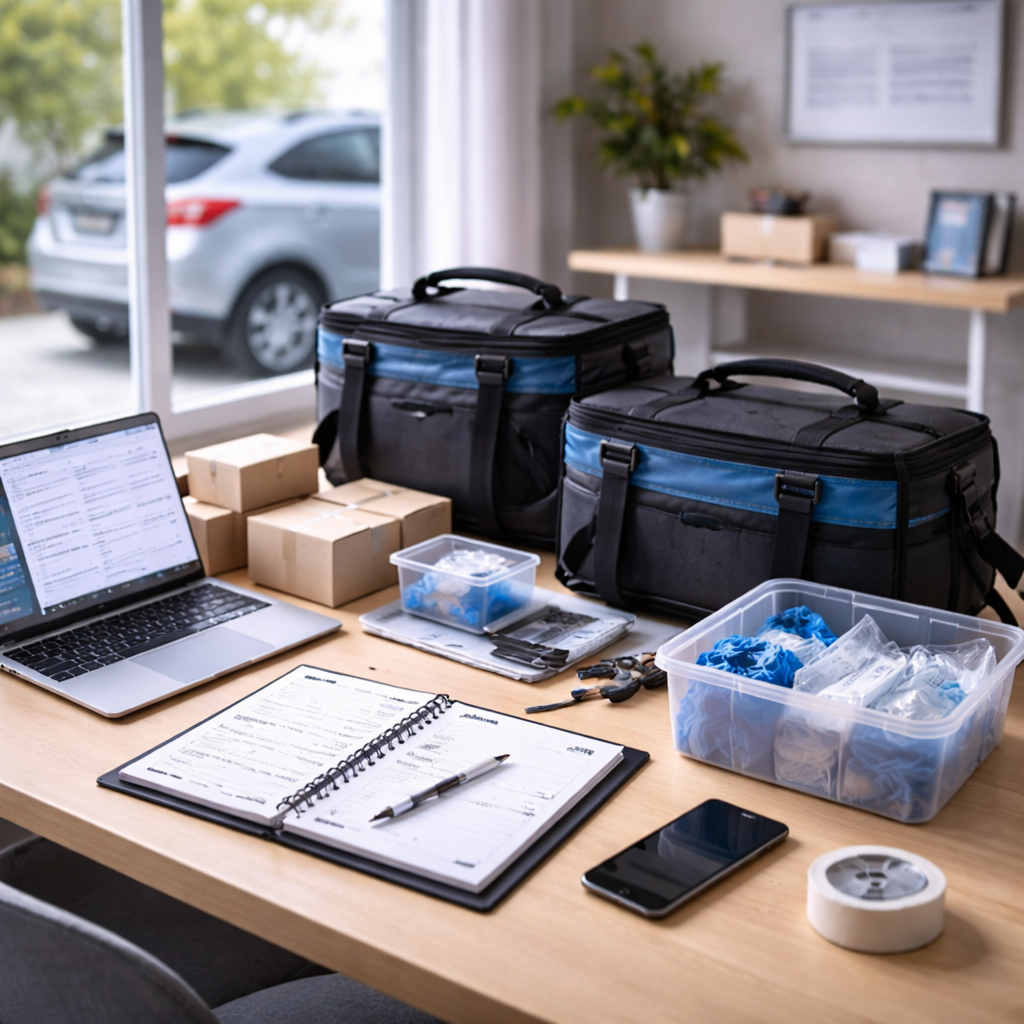
Starting a medical courier business is one of the most overlooked side hustles available right now — and that gap is exactly where the opportunity lives. If you've been looking for a flexible way to build real income with low startup costs and consistent demand, learning how to start a medical courier business from scratch puts you in a market that most side hustlers have never even heard of.
This guide covers everything — what the work actually involves, what you need to get started, how to find your first contract, and what the income looks like at different stages of growth.
What Is a Medical Courier Business
A medical courier transports time-sensitive medical items between healthcare facilities. That includes lab specimens, blood samples, prescription medications, medical equipment, X-rays, and legal medical documents.
You're not a rideshare driver. You're not delivering food. You're a professional transporting items that hospitals, clinics, labs, and pharmacies depend on to function — and that professional context is exactly what makes this work pay more than most delivery side hustles.
For a deeper breakdown of what a medical courier is and what the income potential actually looks like — including what a realistic first month of earnings looks like — that article covers the full picture before you commit.
Why Medical Courier Is Worth Your Attention in 2026
Most delivery side hustles have a ceiling that's set by the app. The app controls the rate. The app controls the territory. The app controls when you work and what you're paid per mile.
Medical courier is different. You contract directly with healthcare facilities — hospitals, labs, clinics, urgent care centers, blood banks — or with medical courier dispatch companies that need independent contractors. The rates are higher, the demand is consistent regardless of weather or season, and the professional nature of the work creates longer-term relationships than gig app work ever does.
A quick look at how medical courier pay compares to food delivery and other side hustles shows the income gap is significant — and grows as you build your client base.
If you want a complete launch system — contracts, pricing templates, outreach scripts, compliance checklists, and a step-by-step business setup guide — the Medical Courier Business System has everything in one place so you're not spending weeks piecing it together from scratch.
What You Need to Start a Medical Courier Business
Getting started doesn't require a commercial license or a medical background. It does require meeting a specific set of requirements that healthcare clients expect from every courier they work with.
Reliable Vehicle
Your vehicle is your primary business tool. Most medical courier work is completed with a standard car, SUV, or van. You don't need a refrigerated truck to start — though temperature-controlled transport opens additional contract opportunities as you grow. Your vehicle needs to be clean, reliable, insured at commercial rates, and large enough to transport coolers and specimen transport bags.
Commercial Auto Insurance
Your personal auto policy doesn't cover business use. Before you transport a single item professionally, you need a commercial auto insurance policy or a business-use rider on your existing policy. This is non-negotiable — and it's one of the first things healthcare clients verify before signing a contract.
HIPAA Awareness Training
Medical couriers transport items covered under HIPAA — the federal law that protects patient health information. You don't need a formal certification, but completing a basic HIPAA awareness training course and being able to demonstrate that awareness to clients matters. Free courses are available through the HHS website and several online training platforms.
Business Registration
Register your business as an LLC before you approach clients. It costs $50 to $150 depending on your state and takes about 30 minutes. An LLC separates your personal finances from your business, provides liability protection, and signals to healthcare clients that you operate professionally — not as a casual gig worker.
Background Check
Healthcare facilities will run a background check before contracting with you. Know what's in yours before they do. Services like Checkr or Sterling produce the kind of reports most medical clients accept.
For the complete state-by-state breakdown of the certifications and requirements you need before you start — including what each item costs and where to get it — that article covers every requirement in detail.
How Much Does a Medical Courier Make
Income varies based on how you structure your business — but here's a realistic picture:
Independent contractor with dispatch company: $18 – $28 per hour for routed runs. Consistent work. Less income ceiling.
Direct contracts with healthcare facilities: $25 – $45 per hour depending on specialty (specimen transport, pharmaceutical delivery, after-hours runs). Higher ceiling. More setup required.
Established route business: $50,000 – $120,000+ annually once you have multiple direct contracts or have added drivers.
The income you start with and the income you grow into are very different numbers — and the gap between them is mostly a function of how you approach client acquisition rather than how many hours you drive.
How to Find Your First Medical Courier Contract
The fastest path to your first contract is direct outreach to local healthcare facilities — not waiting for a dispatch company to assign you work.
Step 1 — Identify your target clients
Your local market contains hospitals, independent labs, urgent care chains, blood banks, dental offices, compounding pharmacies, and fertility clinics. All of these ship specimens, medications, and documents regularly. All of them use couriers. Start with a list of 20 facilities within 30 miles of where you're based.
Step 2 — Contact the right person
At hospitals and large facilities, you're looking for the lab director, materials management department, or operations manager. At smaller clinics and pharmacies, you're often speaking directly with the owner or office manager. Call first. Follow up with an email that includes your insurance certificate, your HIPAA training documentation, and a one-page summary of your services and rates.
Step 3 — Start with off-hours availability
Healthcare facilities have the hardest time covering after-hours, weekend, and holiday runs. Offering availability during those windows is one of the fastest ways to get your foot in the door with a facility that already has a daytime courier they trust.
For the complete 30-day roadmap covering exactly what to do each week — including outreach scripts and follow-up timing — the guide on how to land your first medical courier contract in 30 days maps it out step by step.
Building This Around a Full-Time Job
Most people who start a medical courier business do it on the side of existing employment — and the schedule structure of medical courier work makes that realistic in a way that most side hustles aren't.
Early morning specimen pickups, after-hours pharmacy runs, and weekend coverage are all windows that don't conflict with a standard 9-to-5 schedule. The article on how to build a medical courier side hustle around a full-time job covers exactly how to structure those hours and what a realistic part-time income timeline looks like.
What Comes After the First Contract
The first contract is proof of concept. The second and third are where the business starts to build real momentum. Once you have two or three direct client relationships, you have the foundation for either a stable part-time income or the beginning of a scalable courier operation.
The path from solo courier to multi-driver business is more accessible than most people realize — and how to scale your medical courier side hustle into a full business covers exactly what that transition looks like, including when to add drivers and how to structure contracts for growth.
For the tools and strategies that experienced couriers use to maximize their income per hour — including route optimization software and AI tools — the article on how route optimization and AI tools help you earn more per hour covers the efficiency side of building a profitable operation.
The Medical Courier Business System gives you the complete launch framework — business setup checklist, contract templates, pricing guides, outreach scripts, compliance documentation, and a step-by-step roadmap from day one to first contract. Everything in one place so you can skip the guesswork and start building.
Frequently Asked Questions
How do I start a medical courier business with no experience?
Start by registering your business as an LLC, getting commercial auto insurance, completing a HIPAA awareness training course, and building a list of local healthcare facilities to contact. You don't need prior courier or medical experience — you need professional documentation and the willingness to approach clients directly. Most first contracts come from direct outreach, not job boards.
How much can a medical courier make per hour?
Independent medical couriers typically earn $18 to $28 per hour working through dispatch companies, and $25 to $45 per hour on direct contracts with healthcare facilities. Specialty runs — after-hours pharmaceutical delivery, stat specimen transport — often pay above those ranges. Income grows significantly once you have multiple direct client relationships.
Do I need a special license to be a medical courier?
Most medical courier work doesn't require a special license beyond a standard driver's license, commercial auto insurance, and HIPAA awareness training. Some states have additional requirements for transporting specific items like controlled substances or human tissue — check your state's specific regulations before contracting for those run types.
How do medical couriers find clients?
Direct outreach to local hospitals, labs, clinics, pharmacies, urgent care centers, and blood banks is the most effective client acquisition method. Contacting the lab director or operations manager directly — by phone first, followed by email with your documentation — produces faster results than applying through job boards or courier apps.
Is medical courier a good side hustle?
Yes — particularly for people who want flexible income that pays above standard delivery app rates. The combination of higher pay, consistent healthcare demand, and the ability to build direct client relationships makes medical courier one of the most financially sustainable delivery side hustles available. It's also one with a clear path to a full business, which most gig work doesn't offer.
What is the difference between a medical courier and a regular courier?
A medical courier specifically transports medical items — lab specimens, medications, medical records, blood products, and medical equipment — between healthcare facilities. The work requires compliance with HIPAA, professional documentation, and commercial insurance. The pay is higher than general courier work because the items are time-sensitive and the professional standards are more specific.

Comments ()