
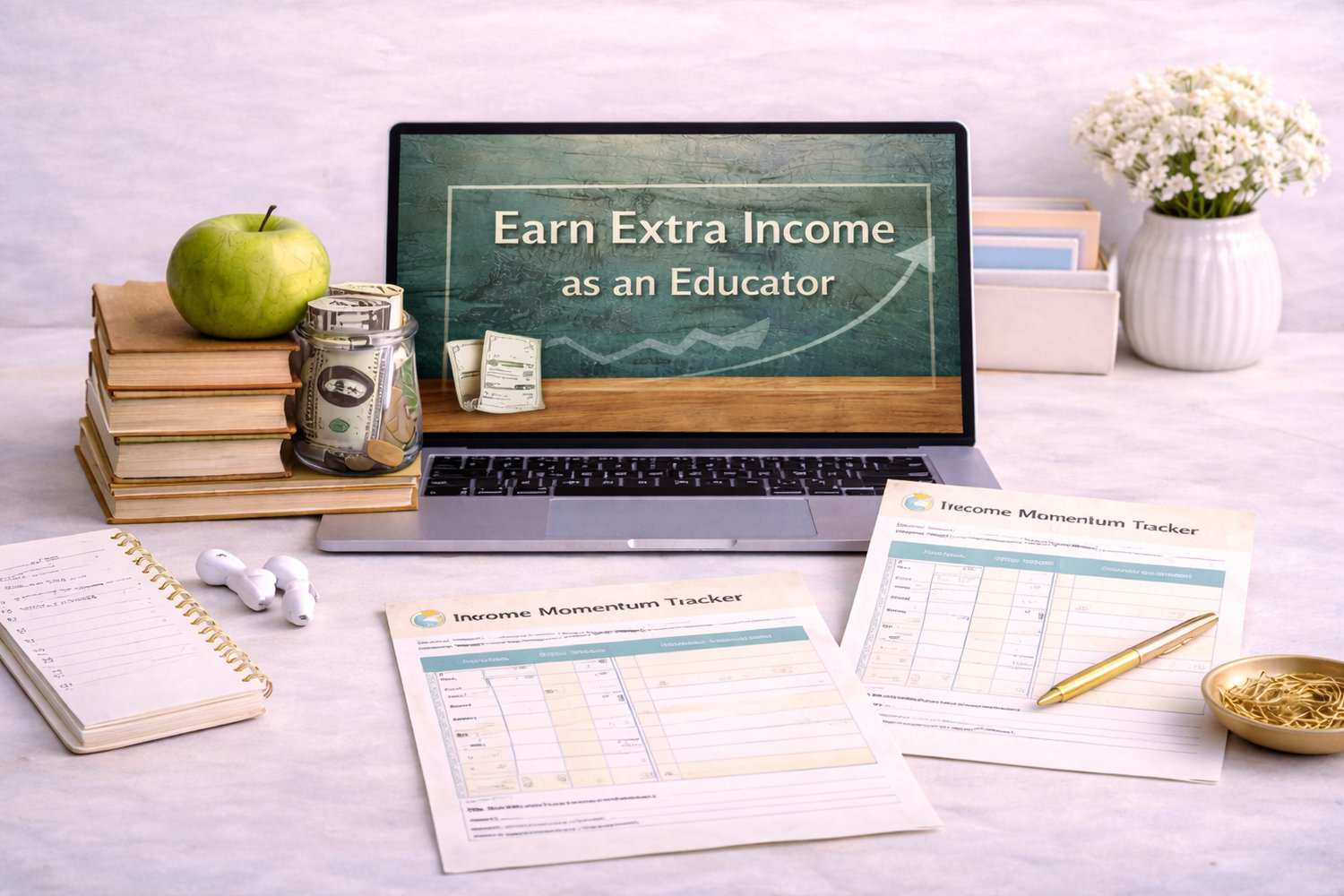
Teaching is demanding work—and for many educators, the financial pressure makes it even harder.
If you’re a teacher looking for extra income, you’re probably stuck between two bad options:
- Doing nothing and staying financially stressed
- Or trying risky “side hustle” ideas that could jeopardize your job, license, or sanity
The truth is, most extra income advice is not designed for teachers.
This guide explains:
- Why common side hustles fail educators
- What job-safe extra income actually looks like
- How teachers can build steady income without quitting or burning out
Why Most Extra Income Ideas Don’t Work for Teachers
Most income advice online assumes you:
- Can take financial risks
- Have unlimited time and energy
- Don’t have strict employment contracts
Teachers operate under very different conditions.
Common problems with typical side hustles:
- High visibility (social media branding, public marketing)
- Time-heavy (nights, weekends, constant availability)
- Contract conflicts (tutoring, consulting, competing services)
- Burnout acceleration, not relief
This is why so many teachers try extra income ideas—and abandon them quickly.
It’s not lack of discipline.
It’s misalignment.
What “Job-Safe” Extra Income Means for Teachers
Job-safe income respects three non-negotiables:
1. Your Employment Contract
Any income stream must avoid:
- Competing with your school or district
- Using school resources or time
- Violating non-compete or ethics clauses
2. Your Energy Limits
If an income idea requires constant output, visibility, or emotional labor, it will fail long-term.
Teachers need income options that are:
- Predictable
- Repeatable
- Compatible with fatigue
3. Your Long-Term Stability
Fast money is tempting—but unreliable income increases stress.
What teachers actually need is steady extra income, even if it starts small.
Realistic Extra Income Options That Work for Teachers
Not every idea is right for every teacher—but the following categories tend to be low-risk and sustainable when done carefully.
Async or Limited Tutoring
- Controlled hours
- Low visibility
- High demand
- Can be done without personal branding
Curriculum or Resource Creation
- Uses existing expertise
- Front-loaded effort
- Long-term earning potential
- Minimal ongoing time
Freelance or Administrative Support
- Organization, communication, or planning work
- Skills teachers already use daily
- Often remote and discreet
Seasonal or Summer Income
- Short-term focus
- Helps create financial buffers
- Reduces panic during breaks
The key is not choosing everything.
It’s choosing one safe option that fits your reality.
Why Steady Income Beats “Side Hustle Culture”
Many teachers feel pressure to:
- Monetize passions
- Build brands
- Turn hobbies into businesses
That pressure often leads to overwhelm.
Steady extra income works differently:
- $300–$500/month reduces financial anxiety
- $1,000/month creates real leverage
- Stability improves decision-making at work
You don’t need an escape plan.
You need options.
A Smarter Way to Start (Without Guessing)
The hardest part for most teachers isn’t motivation—it’s deciding what’s safe and realistic.
That’s why structured tools matter.
Instead of chasing ideas, teachers benefit from:
- Identifying transferable skills
- Filtering out risky income options
- Matching ideas to actual time and energy
- Taking one small, paid action at a time
This is exactly what the Teacher Income Bridge was designed to support.
👉 Teacher Income Bridge is a practical, job-safe toolkit that helps teachers build steady extra income without quitting, burning out, or risking their career.
It includes:
- Decision-making templates
- Safety filters
- A clear 30-day action map
- Guidance built specifically for educators under real constraints
You can view it here:
👉 Teacher Income Bridge – Steady Income Tools
Final Thoughts
If you’re a teacher looking for extra income, you’re not behind—and you’re not wrong to be cautious.
The goal isn’t to hustle harder.
The goal is to protect your career while creating financial breathing room.
Steady income changes everything:
- Less anxiety
- Better boundaries
- More control
Start slow.
Choose safety.
Build quietly.
Comments ()