
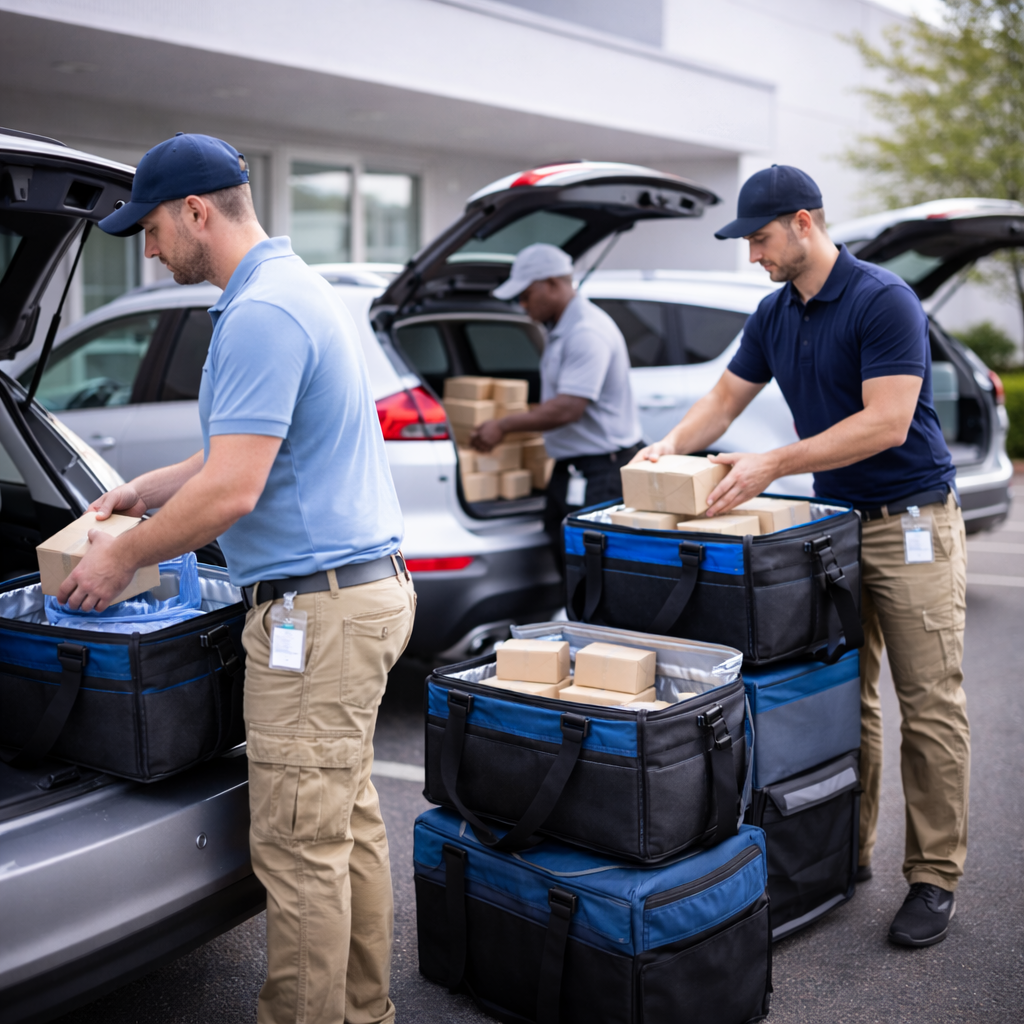
Finding the right medical courier companies to work with is one of the most important decisions you'll make when starting your courier operation. The company you contract with — or the type of client relationship you pursue — determines your starting rate, your route structure, how quickly you build income, and how much control you have over your own schedule.
The best medical courier companies to contract with in 2026 aren't always the most well-known names. Some of the highest-paying opportunities come from direct relationships with healthcare facilities rather than through national dispatch platforms. This guide covers both — the platforms that give you immediate access to work and the direct-client strategy that gives you the highest long-term income.
Two Ways to Contract as a Medical Courier
Before the company rankings — understanding the two fundamental contracting models helps you choose the right starting point for your situation.
Dispatch platform model — You sign on as an independent contractor with a medical courier dispatch company. They assign you routes, manage client relationships on their end, and pay you a set rate per run or per hour. Faster to start. Lower income ceiling. Less control over your schedule and rate.
Direct contract model — You contract directly with hospitals, labs, clinics, and pharmacies. You negotiate the rate, own the relationship, and keep the full contract value. More setup required upfront. Significantly higher income ceiling. Full control over your schedule, rates, and client portfolio.
Most successful medical couriers start with one or two dispatch platform contracts for immediate income while simultaneously building their direct contract pipeline. Over time, direct contracts replace dispatch platform work as the primary income source.
For a full picture of what medical couriers do for the companies they contract with — including what each type of run involves and what clients expect — that article covers the operational side before you start evaluating companies.
Dispatch Platform Companies Worth Contracting With
These are established medical courier dispatch networks that actively recruit independent contractor couriers in most major markets.
1. Dropoff
Pay range: $18 – $26/hour equivalent Coverage: Major metro areas across the US Run types: Medical specimens, pharmaceutical delivery, healthcare document transport Requirements: Clean driving record, commercial insurance, background check, smartphone
Dropoff is one of the more professional dispatch platforms in the medical courier space — their client base includes healthcare systems, labs, and specialty pharmacies rather than consumer-facing delivery. The onboarding process is more thorough than general delivery apps which reflects the professional standard of their client base.
Their pay structure is competitive for a dispatch platform and their route assignments in active markets tend to be consistent rather than sporadic. For new couriers who want immediate routed work while building their direct client base, Dropoff is a solid starting point in markets where they operate.
2. CourMed
Pay range: $20 – $30/hour equivalent Coverage: Expanding national network with strong regional presence in Southern and Midwestern US Run types: Medical specimen transport, prescription delivery, healthcare facility logistics Requirements: Valid driver's license, background check, HIPAA awareness, insurance verification
CourMed specifically focuses on medical and healthcare delivery — not a general courier platform that includes medical as one of many categories. That focus means their client relationships are healthcare-specific and their courier onboarding reflects the professional standards healthcare clients expect.
Their pay rates sit above most general dispatch platforms because of the healthcare-specific focus and the professional standard required. CourMed is particularly strong in markets outside major coastal metros — a useful option for couriers in mid-sized cities where larger platforms have thinner coverage.
3. Axle Health
Pay range: $22 – $32/hour equivalent Coverage: Primarily urban markets — strong presence in major metros Run types: Home health supply delivery, pharmaceutical delivery, clinical specimen transport Requirements: Background check, commercial insurance, HIPAA training certificate, clean MVR
Axle Health sits at the higher end of the dispatch platform pay range because they specialize in healthcare logistics specifically — including home health supply delivery which tends to carry higher rates than standard specimen transport.
Their courier requirements are more specific than general platforms — HIPAA training documentation is required rather than optional — which reflects their healthcare client base and creates a more professional contractor pool overall.
4. OnTrac Medical Division
Pay range: $18 – $25/hour equivalent Coverage: Primarily Western US Run types: Medical supply delivery, pharmaceutical distribution, healthcare facility logistics Requirements: Standard courier requirements plus healthcare-specific background check
OnTrac's medical division handles healthcare-specific delivery for facilities in their Western US service area. Their rates are competitive for a regional platform and they provide consistent routed work rather than on-demand gig-style assignments.
Worth exploring if you're based in their coverage area and want platform work with more route consistency than general delivery apps provide.
5. General Courier Apps With Medical Categories
Platforms like Roadie, TaskEasy, and similar general logistics apps occasionally list medical courier runs within their broader assignment categories. These are worth having as supplementary income sources — particularly for stat runs that come through without a dedicated medical courier platform listing them.
The rates on these platforms are typically lower than dedicated medical courier networks and the assignment frequency for specifically medical runs is less predictable. Use them as supplementary income while your primary contracts develop — not as your main source of medical courier work.
Direct Healthcare Facility Contracts — The Higher-Income Path
The companies and platforms above give you immediate access to medical courier work. The direct contract model gives you the income ceiling worth building toward.
Hospitals and Hospital Systems
Hospital labs, specimen processing departments, and supply chain management offices all use independent courier contractors for routes that their employed staff can't cover — early morning runs, after-hours coverage, weekend and holiday circuits, and overflow from high-volume periods.
The operations manager, lab director, or materials management department is your contact point. A direct hospital contract for a routed run typically pays $25 to $40 per hour depending on your market and the run complexity.
Independent Labs and Reference Labs
Quest Diagnostics, LabCorp, and independent reference labs have specimen pickup routes that run multiple times per day from satellite collection sites. These routes are often contracted to independent couriers and represent some of the most consistent routed work in the medical courier market.
Contact the regional operations manager or the specimen logistics coordinator for your area. These contracts tend to be stable, high-volume, and predictable — ideal for building a foundation of recurring income.
Urgent Care Centers and Specialty Clinics
Independent urgent care chains and specialty clinics generate daily specimen transport needs — blood draws, urinalysis, pathology samples — that need to reach a reference lab within specific timeframes. A single urgent care group with five locations can represent a meaningful monthly contract for a courier who covers all their daily runs.
The office manager or clinic administrator is typically the right contact. These contracts are more accessible than hospital contracts for new couriers because the decision-maker is closer to the surface and the approval process is less bureaucratic.
Compounding and Specialty Pharmacies
Compounding pharmacies produce customized medications that need delivery to specific patients or facilities — often with more specific timing and handling requirements than standard pharmaceutical distribution. They contract with reliable independent couriers who can handle their specific delivery windows professionally.
Blood Banks and Tissue Banks
Blood transport contracts require specific handling protocols and often pay above standard medical courier rates. AABB accreditation awareness and specific blood product handling training are worth obtaining once you're established — these contracts are among the highest-paying in the medical courier market.
How to Approach Both Models Simultaneously
The most effective launch strategy combines both contracting models from the start.
Week one to two: Apply to two or three dispatch platforms to get compliant and get moving on routed work.
Week two to four: Begin direct outreach to local healthcare facilities in parallel. You don't need to wait until your dispatch platform work is running to start building your direct client pipeline.
Month two to three: Convert your first direct contract. Keep dispatch platform work as supplementary income while your direct client base builds.
Month three to six: As direct contracts grow, selectively reduce dispatch platform dependency. Direct contract income should progressively represent a larger share of your total revenue.
For what requirements and certifications each company will expect you to have — including what documentation to prepare before you approach any of the companies listed above — that article covers every requirement in detail.
And for the specific outreach strategy for converting your first direct healthcare contract — how to land your first contract with one of these companies covers the 30-day approach that produces first contracts for couriers who follow it consistently.
The Medical Courier Business System includes a complete company outreach database, application templates for dispatch platforms, direct contract pitch scripts for healthcare facilities, and a compliance documentation package that gets you ready to approach any company on this list professionally and efficiently.
Frequently Asked Questions
What are the best medical courier companies to work for as an independent contractor?
Dropoff, CourMed, and Axle Health are among the strongest dedicated medical courier dispatch platforms for independent contractors in 2026. For the highest income potential, direct contracts with hospitals, reference labs, urgent care chains, and specialty pharmacies consistently outperform dispatch platform rates — though they require direct outreach and a longer client acquisition timeline.
Do medical courier companies hire or use contractors?
Most medical courier companies — both dispatch platforms and direct healthcare facility clients — work with independent contractors rather than employees. You operate as a self-employed business owner, which means you're responsible for your own insurance, taxes, and compliance documentation. The contractor structure gives you the flexibility to work with multiple clients simultaneously.
How much do medical courier dispatch companies pay?
Medical courier dispatch companies typically pay between $18 and $32 per hour equivalent depending on the platform, the market, and the run type. Dedicated healthcare logistics platforms like Axle Health and CourMed tend to pay at the higher end of that range. General courier apps that include medical categories as one of many options typically pay at the lower end.
Can I contract with multiple medical courier companies at once?
Yes — and most successful medical couriers do. Holding contracts with one or two dispatch platforms while simultaneously building direct healthcare facility relationships is the standard approach for couriers who want both immediate income and long-term income growth. There are typically no exclusivity requirements in independent contractor medical courier agreements.
How do I find medical courier companies in my area?
Start with the national and regional dispatch platforms listed in this article and check their coverage maps for your market. For direct healthcare facility contracts, search your local area for hospitals, independent labs, urgent care chains, compounding pharmacies, blood banks, and specialty clinics — these are your direct contract targets regardless of whether a dispatch platform operates in your market.
What do medical courier companies look for in a contractor?
Professional documentation is the primary requirement — commercial auto insurance, a clean driving record and background check, HIPAA awareness training, and LLC or business registration. Beyond documentation, healthcare clients look for reliability, professional communication, and the operational consistency that their patient care timelines depend on. Couriers who meet the professional standard consistently build long-term contract relationships.

Comments ()